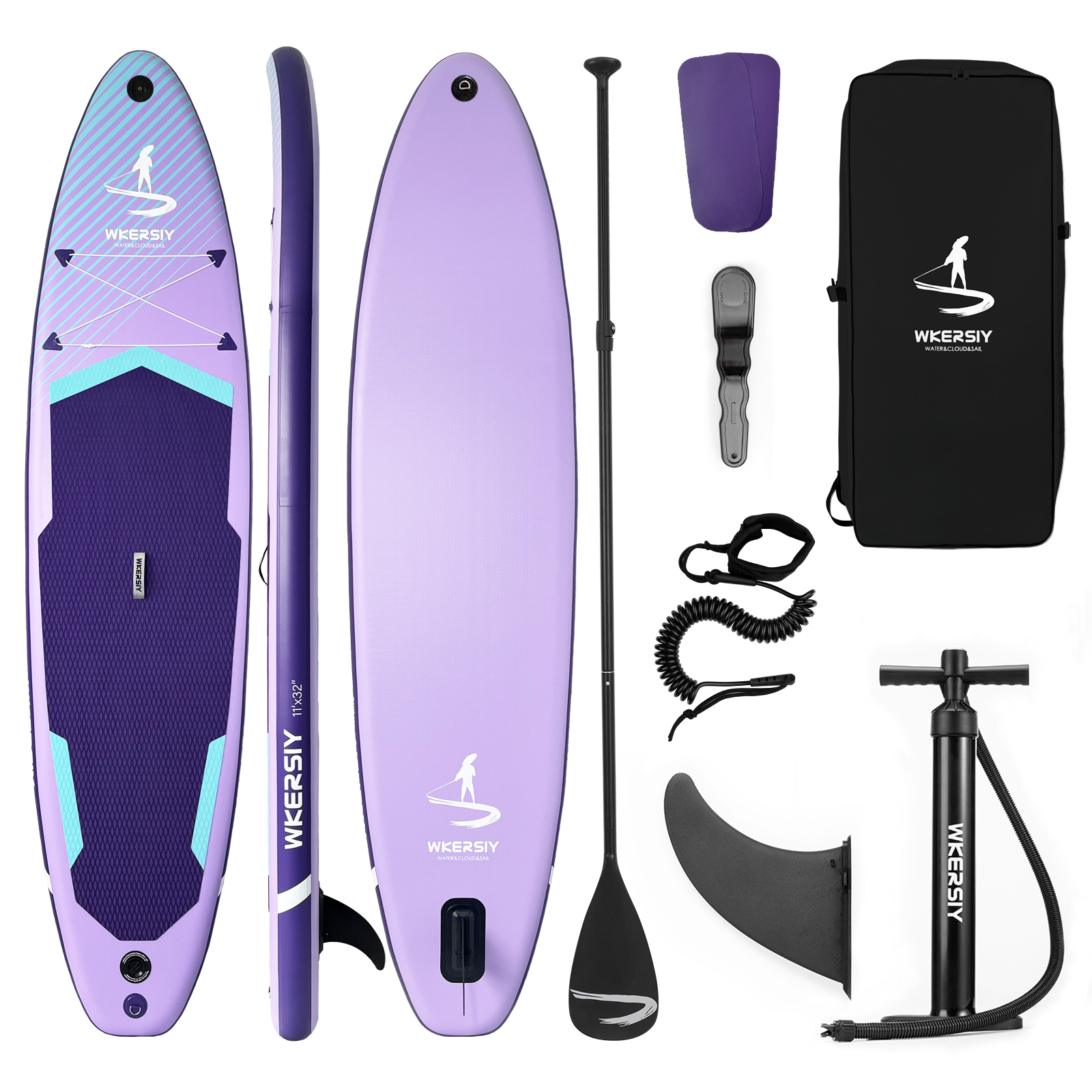
SUP PRODUCTION
How We Ensure Product Quality
We began manufacturing inflatable boats back in 2005, launched our first inflatable stand-up paddleboards (iSUPs) in 2013, and have since built over 20 years of expertise in producing high-quality inflatable water sports gear.
To continuously improve our products, we’ve formalized our decades of hands-on experience into a comprehensive quality management system. This includes:
- A standardized SUP production workflow
- Detailed work instructions for every manufacturing step
- Rigorous raw material inspection records
- Scheduled equipment maintenance logs
- Comprehensive finished product inspection reports
Thanks to these quality controls, we consistently deliver paddleboards with a defect rate of less than 0.5%—significantly reducing after-sales issues and protecting your brand’s reputation in the market.
Stand-Up Paddleboard (SUP) Manufacturing Process
1.Design & Engineering
The board’s shape, dimensions, and functional features are finalized in CAD software based on its intended use—whether for touring, yoga, fishing, or all-around recreation. A digital template is then generated to guide precise cutting patterns and layer alignment throughout production. We use Pantone color codes to ensure precise and consistent color matching across all custom designs.
2.Material Preparation
We use high-quality drop-stitch cores: thousands of high-tenacity polyester threads tightly stitched between two layers of PVC-coated fabric. The outer shell is made from reinforced PVC, selected for superior durability, UV resistance, and long-term air retention.. You can choose ordinary single layer or MSL drop-stitch fabric.
3.Cutting
All fabric layers and drop-stitch cores are cut with CNC-controlled precision machines, following exact templates for the deck, bottom, and rails to ensure perfect fit and consistency.
4.Printing & Graphics
Custom logos and designs are applied directly onto the outer PVC layers using UV-resistant screen printing or digital UV printing—before lamination—to ensure vibrant, fade-resistant graphics that last
5.Lamination & Layer Assembly
The drop-stitch core is carefully sandwiched between top and bottom outer layers.
6.Bonding Method
We don’t use bonding or welding processes to seal the air chambers of our paddleboards. Instead, we rely on the same time-tested, hand-laminated adhesive method we’ve used for inflatable boats since 2005.
This traditional technique—performed by highly skilled technicians—delivers more consistent quality and better control over board symmetry, which is critical for balance and performance. With decades of hands-on experience, our craftsmen ensure every seam is airtight, resulting in reliable, leak-free boards you can trust.
This traditional technique—performed by highly skilled technicians—delivers more consistent quality and better control over board symmetry, which is critical for balance and performance. With decades of hands-on experience, our craftsmen ensure every seam is airtight, resulting in reliable, leak-free boards you can trust.
7.Valve Installation
A high-pressure inflation valve is heat-welded into a pre-cut opening on the deck, typically positioned near the tail for easy access.. Dual-chamber paddleboards are equipped with two separate inflation valves—one for each air chamber—to enhance safety and redundancy.
8.Fin Box & Hardware Attachment
Fin boxes (e.g., US Box or slide-in systems) are securely bonded to the board’s underside. D-rings, leash plugs, and bungee anchor points are welded or riveted onto the deck and rails for reliable gear attachment.
9.Deck Pad Application
Pre-cut EVA foam pads with textured, non-slip surfaces are adhered to the deck using marine-grade adhesive—ensuring comfort, grip, and long-lasting performance. For EVA deck pads, we recommend multi-color block segmented inlay construction over printed graphics. This method offers superior durability, long-lasting color integrity, and resistance to fading—even under prolonged UV exposure and saltwater use.
10.Quality Control & Testing
Every board undergoes rigorous inspection:
Pressure test (15–20 PSI) to verify airtight integrity,
Visual check for print quality, alignment, and surface defects,
Dimensional verification against original design specifications.
11.Packaging
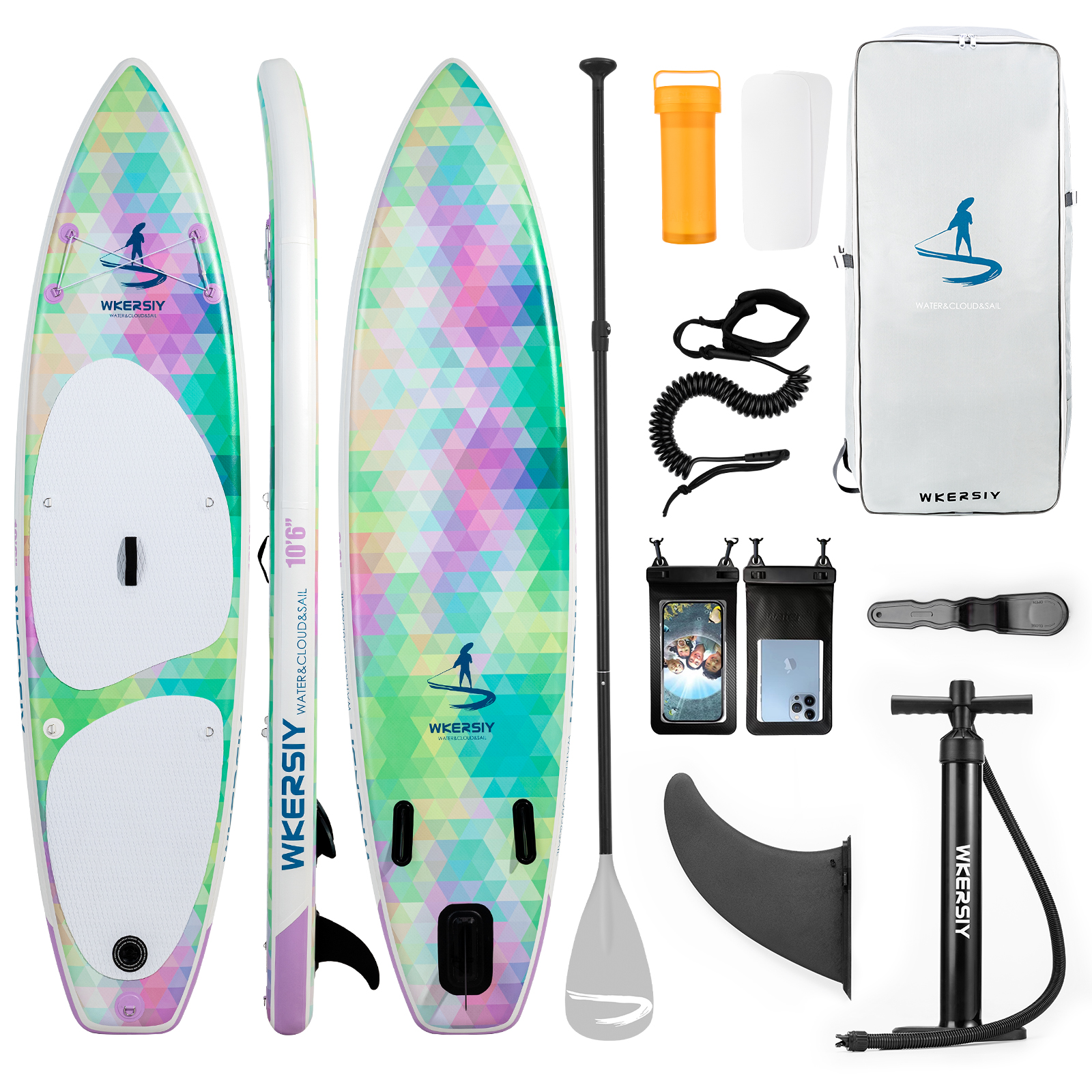
The board is neatly rolled, folded, and packed with essential accessories—including pump, paddle, fin, repair kit, and carry bag—into a retail-ready box designed for shipping and shelf appeal.
For eco-conscious brands, we offer sustainable, environmentally friendly packaging options.
OUR SUP PRODUCT
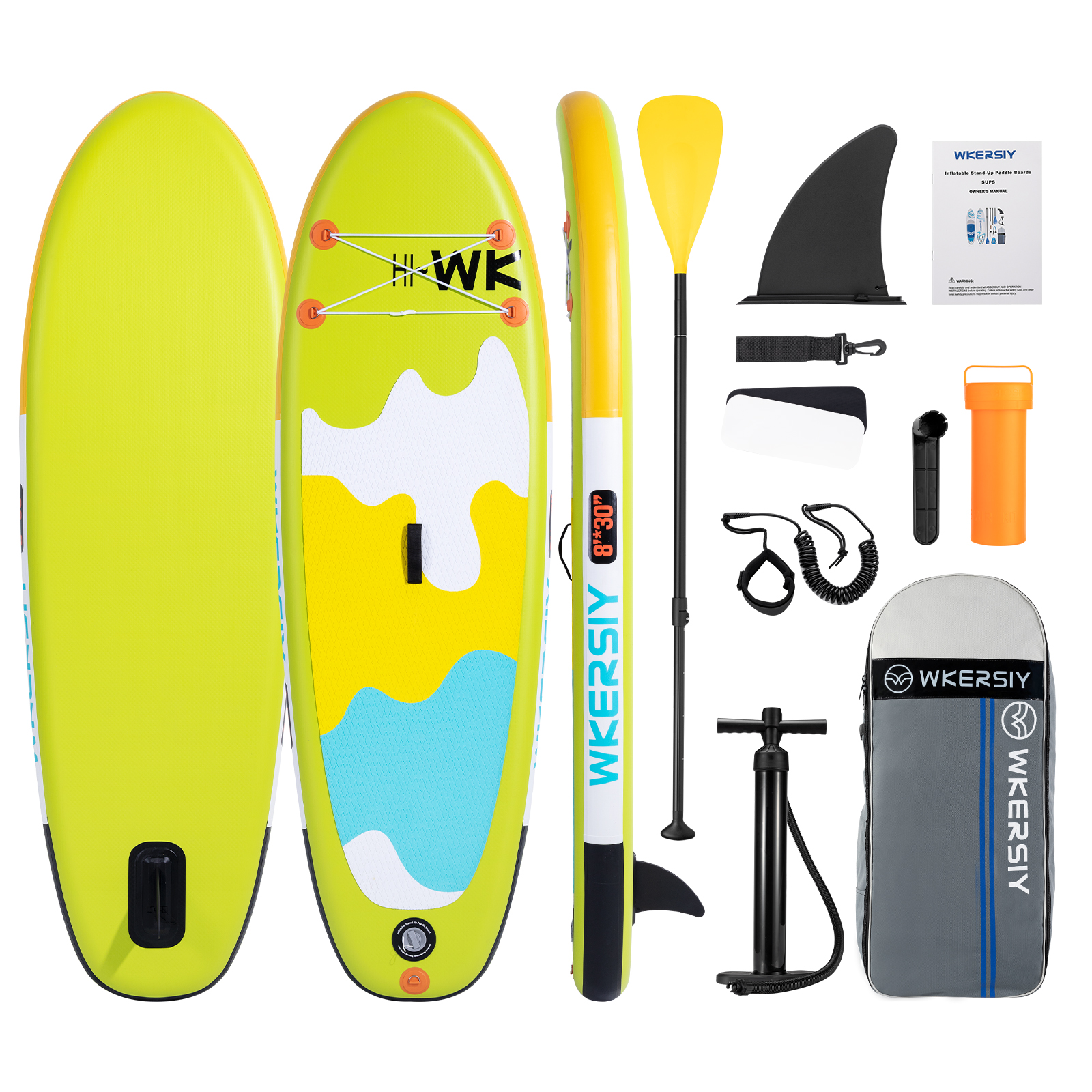
Kids Paddle Board
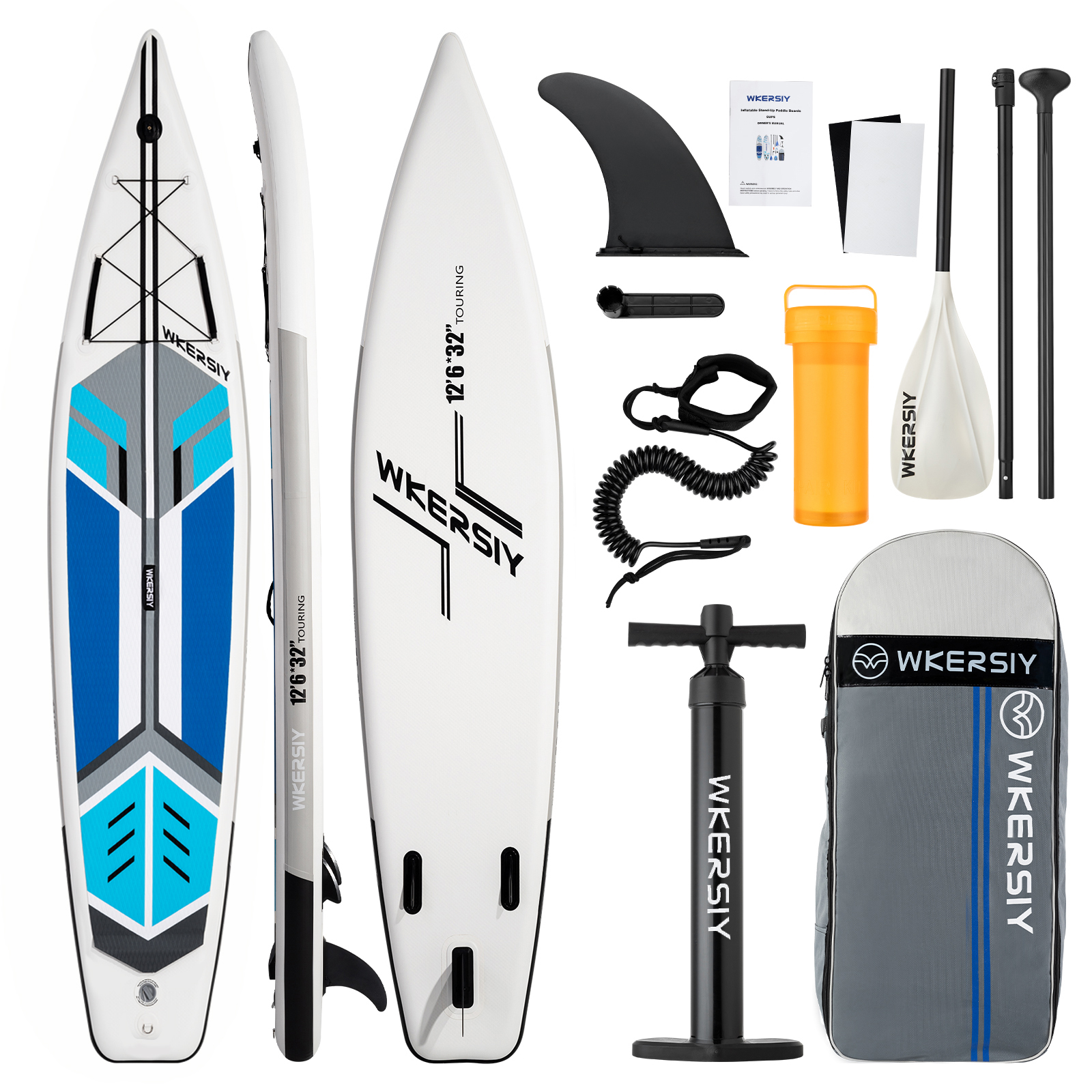
Cruiser Paddle Board
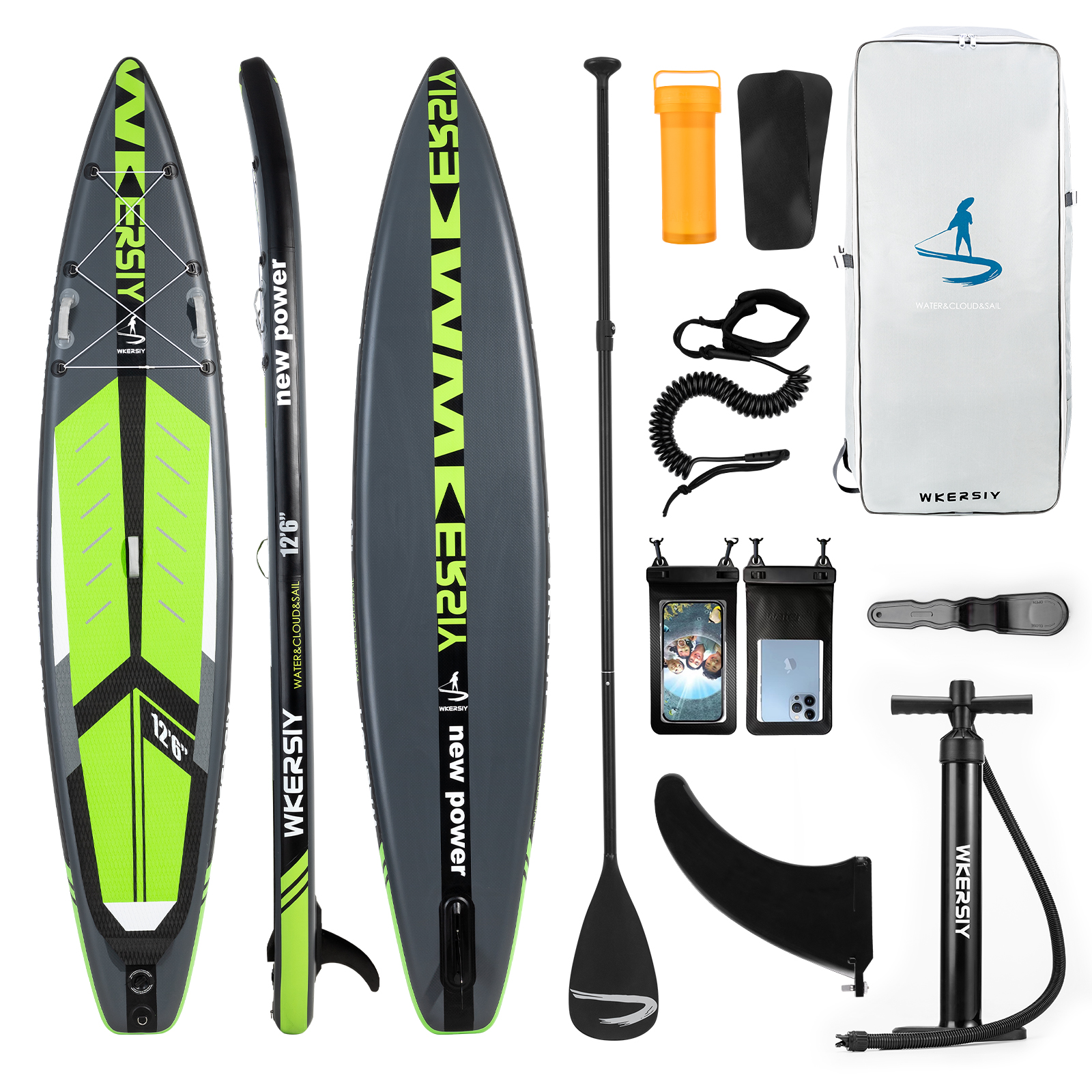
Racing Paddle Board
Ultra-Light Paddle Board